Tuesday, June 28, 2022

ZeroCovid group declares monkeypox a pandemic

World Health Network declares Monkeypox a pandemic | Mint

June 24. 2022 - "With 3,417 confirmed Monkeypox cases reported across 58 countries, World Health Network (WHN) has announced that they are declaring the current monkeypox outbreak a pandemic. The WHN announcement comes ahead of WHO [World Health Organiztion] meeting to be held on 23 June to decide on their monkeypox outbreak designation....


"The outbreak will not stop without concerted global action, [WHN] said. Even with death rates much lower than smallpox, unless actions are taken to stop the ongoing spread ... millions of people will die and many more will become blind and disabled, it said... WHN said that the essential purpose of declaring Monkeypox a pandemic is to achieve a concerted effort across multiple countries or over the world to prevent widespread harm.

"'There is no justification to wait for the monkeypox pandemic to grow further. The best time to act is now. By taking immediate action, we can control the outbreak with the least effort, and prevent consequences from becoming worse.... Any delay only makes the effort harder and the consequences more severe', said Yaneer Bar-Yam,* PhD, President of New England Complex System Institute and co-founder of WHN.

"'The WHO needs to urgently declare its own Public Health Emergency of International Concern (PHEIC) — the lessons of not declaring a PHEIC immediately in early January 2020 should be remembered as a history lesson of what acting late on an epidemic can mean for the world,' said Eric Feigl-Ding,* PhD, Epidemiologist and Health Economist, and co-founder of WHN."
Read more: https://www.livemint.com/news/world/world-health-network-declares-monkeypox-a-pandemic-11655951549860.html

WHO: Monkeypox outbreak not yet a global public health emergency | Stat - Andrew Joseph:

June 25, 2022 - "The World Health Organization on Saturday declined to declare the unprecedented monkeypox outbreak that has spread around the world a public health emergency as of now. A public health emergency of international concern, or PHEIC, grants the WHO director-general certain powers, such as the ability to recommend how countries should respond.... The announcement came after a WHO emergency committee met Thursday to discuss the outbreak. Some 3,000 cases have been documented since mid-May, ... outside the regions in West and Central Africa where the virus is endemic and has animal reservoirs. Most of the cases have been in gay, bisexual, and other men who have sex with men, with many occurring in men who have had multiple recent sex partners. One death has been reported, in an immunocompromised person....

"Gregg Gonsalves,* an associate professor of epidemiology at Yale School of Public Health, disagreed with WHO’s decision, which he called a 'punt.' He said he felt that the criteria had been met and that a PHEIC declaration could have pushed public health authorities to step up their response and coordinate better across countries. Gonsalves served as an adviser to the emergency committee, but did not have a say in whether to recommend a PHEIC be declared.

"Monkeypox infections can lead to painful lesions and rashes, including vesicles forming on the palms.... Many of the cases in the current outbreak have been comparatively mild, though some patients have been hospitalized for pain management as the infection runs its course.... In the current outbreak, ... the United States has reported 200 monkeypox cases, Germany has identified more than 675 cases, Portugal more than 300, and the United Kingdom more than 900. South Africa on Thursday also reported a case in a person who had no recent travel history....

"The PHEIC designation was created in an update to the International Health Regulations following the 2002-2003 SARS outbreak....The first PHEIC was declared for the 2009 H1N1 flu pandemic, and others have included Ebola outbreaks and the Zika epidemic. The two active PHEICs are for Covid-19 and the continued transmission of polio."
Read more: https://www.statnews.com/2022/06/25/who-monkeypox-outbreak-not-yet-a-global-health-emergency/ 

* signatory of the John Snow Memorandum 

Monday, June 27, 2022

Lockdown in Shenzhen, China, for 11 Covid cases

Coronavirus: Chinese factory hub Shenzhen shuts down Hong Kong border district for 3 days | South China Morning Post - Amanda Lee:

June 26, 2022 - "China’s southern manufacturing powerhouse of Shenzhen has closed wholesale markets, cinemas and gyms in a central district bordering Hong Kong for three days as it steps up to prevent a wider spread of Covid-19. The Shenzhen municipal health commission said all bars and parks would be shut in Futian district, and public events suspended, after nearly a dozen local cases were found over Friday and Saturday. Shenzhen reported seven local cases, five of which were symptomatic, on Friday and four local asymptomatic cases on Saturday. All of the cases were found in Futian district, except for one case in Luohu district on Saturday.

"Some bus and subway services have also been suspended in the district, home to around 1.55 million people and one of the world’s largest electronics markets. Restaurants are limited to 50 per cent of capacity. The measures will last at least three days, and then be 'adjusted' according to the disease situation, the commission said.

"Daily Covid-19 nucleic acid test results have now become necessary for using public transport or entering public venues in Futian, after the testing window for negative reports was shortened from 48 hours to 24.

Charlie Fong, Panorama of Futian district, Shenzhen, 2021. CC BY-SA 4.0, Wikimedia Commons.

"The latest restrictions in Shenzhen, a city of 17.5 million that saw a sudden weeklong lockdown in March, underscore the challenges of trying to stamp out the highly transmissible Omicron variant as China sticks to a 'dynamic zero-Covid' policy. Two of China’s largest cities, the capital Beijing and the financial and business hub of Shanghai, have been battling a resurgence of Covid-19 since late March, with Shanghai emerging from a two-month citywide lockdown only on June 1.... Strict containment measures are part of China’s continued adherence to its zero-Covid policy, which aims to eliminate all outbreaks. However, while the curbs may have reduced the spread of infections, they have also fuelled frustrations among both local and international businesses and taken a heavy toll on the economy.

"A Futian resident who did not want to be named said his community had been designated as a 'controlled' area for a week from June 18, after one case was detected. 'Compared with the seven-day lockdown in March, I think the snap lockdown is better and more flexible,' ... the resident said. However, locals were concerned when they were told not to leave their homes during that period. Under the Guangdong provincial government’s definition of a 'controlled' area, the second in a three-tier Covid-zoning system, residents can leave their homes and move around within the community....

"Brian Miller, chief executive of Easy China Warehouse in Shenzhen’s Baoan district, said measures such as mandating negative coronavirus test results in getting around many parts of the city had been effective in preventing extensive lockdowns.... However, Miller also noted that the strict curbs had placed a financial burden on business owners and put off people from travelling in and out of China....

"'I haven’t left [China] for three years,' Miller added. 'One of the reasons why I haven’t left is not only because of the border [restrictions]. I’m just worried that there might be some policy that might not allow me to come back in, as a foreign national.'"

Read more: https://www.scmp.com/news/china/politics/article/3183122/coronavirus-chinese-factory-hub-shenzhen-shuts-down-hong-kong

Sunday, June 26, 2022

Hidden costs of decarbonizing energy

The Hard Math of Minerals | Issues in Science and Technology - Mark P. Mills: 

January 27, 2022 - "Today’s plans to decarbonize global energy systems center on a massive expansion in the use of solar, wind, and battery technologies, with the goal of these becoming the dominant means to power society. But scaling up these energy sources entails a radically heavier materials footprint than is associated with fossil fuels.... The unavoidable scale of materials demand will have significant impacts on commodities markets and prices, as well as on the environment. Most policy formulations fail to account for these implications. The country is long overdue for thoughtful and realistic planning that honestly acknowledges the tradeoffs and consequences arising from the materials needed to accelerate what is being called the energy transition.

"It has long been known that building solar and wind systems requires roughly a tenfold increase in the total tonnage of common materials — concrete, steel, glass, etc. — to deliver the same quantity of energy compared to building a natural gas or other hydrocarbon-fueled power plant. Beyond that, supplying the same quantity of energy as conventional sources with solar and wind equipment, along with other aspects of the energy transition such as using electric vehicles (EVs), entails an enormous increase in the use of specialty minerals and metals like copper, nickel, chromium, zinc, cobalt: in many instances, it’s far more than a tenfold increase.... Installing so much wind and solar generation capacity worldwide has profound materials implications, not to mention land requirements.... Replacing the energy output from a single 100 megawatt (MW) natural gas-fired turbine (producing enough electricity for 75,000 homes) requires at least 20 wind turbines, each about 500 feet tall and collectively requiring some 30,000 tons of iron ore and 50,000 tons of concrete, ... requir[ing] 10 square miles of land. And although a solar installation would require one-third as much land as wind, the aggregate tonnage of cement, steel, and glass used is about 150% greater than wind.

"Scaling up solar, wind, and batteries also means scaling up the mining of the refined minerals they require. There is a significant environmental impact associated with the sheer tonnage of earth that must be moved and processed to produce these refined minerals. To produce one ton of a purified element, a far greater quantity of ore must be extracted and processed. Copper ores, for example, typically contain only about 0.5% by weight of the element itself: roughly 200 tons of ore are dug up, moved, crushed, and refined to produce 1 ton of copper.... Cobalt (used in most batteries) occurs at a grade typically lower than 1 ton of the element per 1,500 tons of ore.... The IEA [International Energy Agency] ... estimates that an energy plan more ambitious than implied by the 2015 Paris Agreement, but one that remains far short of eliminating the use of fossil fuels, would increase demand for minerals such as lithium, graphite, nickel, and cobalt rare earths by 4,200%, 2,500%, 1,900% and 700%, respectively, by 2040.... The IEA report is not alone in pointing out that the required mining and processing infrastructure capacities don’t yet exist to meet the demand for essentially every category of mineral necessary for the transition path. 

"In a recent report from the Geological Survey of Finland, researchers considered the minerals implications for ... using solar and wind to electrify all ground transport as well as to produce hydrogen for both aviation and chemical processes. They found the resulting demand for nearly every necessary mineral, including common ones such as copper, nickel, graphite, and lithium, would exceed not just existing and planned global production capabilities, but also known global reserves of those minerals. A recent analysis by the Wood Mackenzie consultancy found that if EVs are to account for two-thirds of all new car purchases by 2030, dozens of new mines must be opened just to meet automotive demands — each mine the size of the world’s biggest in each category today. But 2030 is only eight years away and, as the IEA has reported, opening a new mine takes 16 years on average....

"Another area of concern for these new technologies is their future cost.... Today, future plans for solar, wind, and battery technologies assume costs will continue to fall significantly, as they have over the last decade. But the implications of record-breaking demands for mineral commodities suggest the reverse is more likely. Consider batteries.... Numerous estimates ... suggest that commodity materials comprise 60 to 70% of the cost to produce a battery. Thus, modest increases in commodity prices can wipe out gains in the smaller share of costs associated with assembly, electronics, and labor, leading to overall higher costs.... In fact, 2021 saw high material costs lead to overall lithium battery prices declining by only 6%. That was a dramatic slowdown from the decadal trend, and less than half the decline rate in each of the prior two years. Although EVs comprise only 5% of the market for automobiles, the price index of EV battery metals has already increased by more than 200% over the past two years....

"There is, in short, no escaping the fact that the astonishing scale of global materials production needed for proposed energy transition plans will almost certainly place severe limits on aspirations for expanding the use of wind, solar, and battery systems. But even before those limits are reached, the pursuit of a materials-heavy energy infrastructure will cause economic impacts that ripple beyond energy markets, inflating the cost of nonenergy uses for the same minerals in computers, conventional manufacturing equipment, everyday consumer appliances, and more. Beyond economics, there are also the practical and geopolitical challenges arising from realignments of energy material supply chains..... Finally, there are the social and moral implications associated with a radical shift in the types and locations of environmental impacts that comes from replacing drilling (for fossil fuels) with a massive expansion in mining, much of which will occur in emerging markets and fragile ecosystems....

"Based on today’s physics and technology, the only path to an energy system with a material intensity lower than hydrocarbons would be one focused on nuclear fission.... Nuclear fission offers a potential hundredfold reduction in material intensity over combustion, and a thousandfold reduction over solar and wind. Here too, though, even if policies are implemented that are conducive to a nuclear renaissance, meaningful expansion will take decades longer than the rapid transition timelines popular today.

"The material realities associated with solar, wind, and storage technologies do not obviate an expanded, or even a substantial, role for these energy systems. However, believing that such technologies make possible a rapid and wholesale replacement of fossil fuels ignores the underlying physics, engineering, and economics. Even more troublesome, putting so much effort and money into those technologies will lead the world down a path that won’t meet targets to reduce carbon dioxide emissions, but would cause massive collateral damage to economies and the environment."

Read more: https://issues.org/environmental-economic-costs-minerals-solar-wind-batteries-mills/

Saturday, June 25, 2022

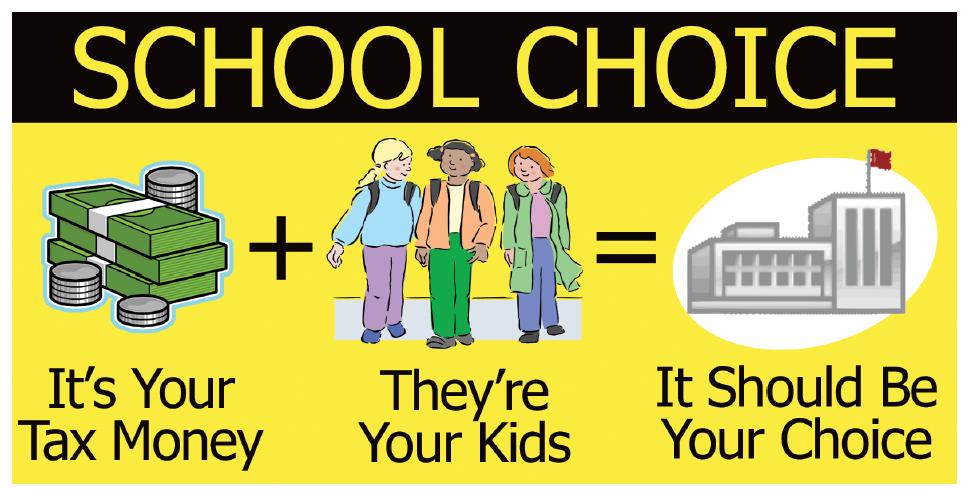
SCOTUS gets school funding decision right

Overlooked in the controversy over their overturning of Roe v. Wade was another SCOTUS decision that will also have a great impact on children in the future.

The Death of Separationism and the Life of School Choice | Law & Liberty - John O. McGinnis:

June 23, 2022 - "In a Supreme Court term of many consequential decisions, Carson v. Makin stands out for its likely enduring legal and political effects. In Carson, which was handed down on Tuesday, the Court held that Maine could not prevent parents from using its tuition assistance for rural residents at sectarian religious schools. As Chief Justice Roberts said, a 'State need not subsidize private education. But once a State decides to do so, it cannot disqualify some private schools solely because they are religious.'

"The case is the culmination of a series of rulings in which the Roberts Court has held unconstitutional any condition that withholds generally available state aid from religious institutions. Previous cases had prevented aid from being withheld on the basis of the religious identity of the institution. This case extends that principle to prevent it from being withheld on the basis of the religious use to which the institution puts the tuition assistance — in this case to a school that includes religiously based instruction. The Free Exercise Clause requires neutrality between religious and nonreligious institutions and uses to which citizens can put their government-provided assistance.

"The doctrine of unconstitutional conditions is familiar across the breadth of constitutional law. A state, for instance, could not prevent citizens from using generally available tuition assistance for private schools on the basis of what a teacher said about the American Revolution, because that would be an unconstitutional condition on free speech. Carson makes clear that the doctrine of unconstitutional conditions is as applicable to Free Exercise as to other constitutional rights.  

"The broader significance of Carson v. Makin is that the Court has made it clear that the Free Exercise Clause will be treated like other rights and will not be limited by the nonoriginalist principle of Separation of Church and State.  The case ... spends little time quoting sources from the founding on the meaning of either the Free Exercise or Establishment Clause. It is nevertheless informed by the movement toward originalism, because what has historically distinguished the treatment of the Free Exercise Clause from other rights is a nonoriginalist view of the Establishment Clause, namely that it incorporates a broad and wooly principle of Separation of Church and State. And that view was itself sometimes supported by a faulty originalism, relying on a few snippets from founding era materials, like Thomas Jefferson’s 'wall of separation' comment in his reply to a letter from the Baptist Church in Danbury, Connecticut.  

"If the Constitution had indeed established a principle of complete separation, it is plausible that a state would have a compelling or at least substantial interest in preventing parents from using generally available aid at a religious school. Separationism would suggest that religious institutions and the state must have no connection. Separationism also animates the notion there must at least be some 'play in the joints' between the two Clauses, meaning that a state’s concern about the Establishment Clause could justify restrictions on the scope of Free Exercise rights.... But the Carson majority notably does not deploy the phrase, 'play in the joints.' The dissents by Justice Stephen Breyer and Sonia Sotomayor rely on that phrase a total of nine times between them. The dissents also expressly relied on separationism, while the majority dismissed any separationist concern. Thus, the meaning of the Establishment Clause is what ultimately divides the Court....

"Scholarship debunking the separation of church and state as the original principle lurking behind the Establishment Clause has been crucial to recent developments in the religion clauses, because it provides the background for Carson’s doctrinal moves. In particular, Philip Hamburger’s magisterial Separation of Church and State shows that there was very little opinion at the time of Framing that attached anything like this principle to the Establishment Clause. The use of the term by Thomas Jefferson (not of course a Framer) was extremely unusual. Instead, according to Hamburger, what animated the Establishment Clause was the concern of religious dissenters that they not suffer discrimination and that the state, as Hamburger puts it, not take 'cognizance' of religion by creating religious tests and putting other religiously infused requirements into law. Measured against this understanding of the meaning of 'establishment' and its dangers, Carson’s insistence that religious schools not be discriminated against in generally available programs is completely consistent with the Establishment Clause’s strictures. A program that is non-preferential between secular and any religious education hardly establishes a religion.... 

"Carson is not only important for what it does for Establishment Clause jurisprudence but what it does for the school choice movement. That movement already has political momentum. First, many public schools have been heavily criticized for closing for too long during the pandemic with substantial losses of learning, particularly for the poorest students. Second, many parents are furious with what their public schools are teaching, viewing commonly used history curricula in particular as tendentious and unpatriotic. Many also worry about an emphasis on equity over excellence. As a result, a parental rights movement is emerging as a powerful electoral force.

"School choice is the logical institutional manifestation of parental rights. A parent who can choose the school his or her child attends has more influence on the child’s education. At a traditional public school, a parent can only vote in a school board election, and once the school board is elected, he or she retains no substantial leverage at all. School choice provides the invaluable right of exit. Carson assures those who want to send their children to religious schools that religious choices can never be excluded from a choice program. Thus, it energizes parents who want a religious alternative to the traditional public school to join with parents who want alternatives for secular reasons. The ruling thus contributes even more energy to one of our most important contemporary social movements."

Read more: https://lawliberty.org/the-death-of-separationism-and-the-life-of-school-choice/

Friday, June 24, 2022

South Africa ends Covid restrictions

South Africa ends COVID restrictions as fifth wave fades | Voice of America - Reuters:

Jun 23, 2022 - "South Africa has repealed COVID-19 rules that made masks mandatory in indoor public spaces, limited the size of gatherings and imposed entry requirements at its borders, the health minister said on Thursday.

"The country has recorded the most coronavirus cases and deaths in Africa, with more than 3.9 million confirmed infections and upwards of 101,000 deaths.... Health minister Joe Phaahla said on Thursday that authorities had noted a decline in cases, hospitalisations and reported deaths and concluded that a limited fifth wave was dissipating.

“'The COVID-19 virus is not yet gone, … we are just stronger than before especially with vaccination,' he told a news conference, urging those eligible for boosters and not yet vaccinated to come forward.... About half of the country’s 40 million adults have received at least one vaccine dose, with 46% fully vaccinated.

"Phaahla said managers of places, such as restaurants, hotels and schools could still require masks on their premises but it was no longer government policy....

Tourism Minister Lindiwe Sisulu said scrapping the requirement for travelers to show a vaccination certificate or negative COVID test would help make South Africa more accessible and help the hospitality industry.

"Asked about the country's latest steps, Africa's top public health agency said countries were at different stages of coping with COVID-19 and advised the use of data-driven strategies.

"'We also expect that the protocols will not all be the same during this stage of the pandemic,' the acting director of the Africa Centers for Disease Control and Prevention (Africa CDC) Ahmed Ogwell Ouma told a briefing. 'We have encouraged them [countries] to use their own data, the evolving situation on the ground and their capacity for surveillance ... to provide any adjustments.'"

Read more: https://www.voanews.com/a/south-africa-repeals-covid-rules-as-fifth-wave-fades/6629680.html

Thursday, June 23, 2022

Medical vax mandates no longer make sense

Vaccines make sense, banishing unvaccinated Nova Scotia health workers doesn’t | Saltwire - Paul Schneidereit:

June 22, 2022 - "It’s time for Nova Scotia — desperately short of doctors, nurses and other medical professionals — to drop its mandatory vaccination policy for health-care workers. Although some may twist it that way, that’s not an anti-vaccination position....

"Omicron subvariants, especially the latest BA.4 and BA.5, have demonstrated a remarkable ability to infect even vaccinated individuals or those who’ve previously had the disease. Boosters do raise a person’s level of protection against infection ... but even that fades within months.... [O]micron and its burgeoning subvariants are ... 'an especially stealthy immune invader' which can evade a body’s defences while limiting immune response, increasing danger of future reinfection, warned one British researcher. 

"So, let’s take stock:

"That doesn’t make much sense to me....

"Canadian jurisdiction[s] that had mandatory vaccination policies for health-care workers have now dropped them, except for three — Yukon, British Columbia and Nova Scotia. Vaccine mandates for health-care workers ended in Alberta in March, in New Brunswick in early April and in Newfoundland and Labrador on June 1

"Last week, Ottawa dropped its vaccine mandate for federal employees and domestic travellers. 

"On Saturday, an arbitrator in a labour dispute between Canadian autoworkers and Stellantis NV, maker of Dodge and Chrysler vehicles, ordered the company to end its vaccine mandate policy. The policy was initially reasonable, the arbitrator ruled, but is no longer defensible in light of evidence of waning vaccine effectiveness against the omicron variant. The arbitrator said the company failed to establish any notable difference in risk of transmission of the omicron virus between vaccinated and unvaccinated individuals. 

"Let’s be clear here. Getting vaccinated (and boosted) is still the smartest thing you can do to protect yourself against COVID-19.... Although being vaccinated doesn’t guarantee you won’t catch the disease, multiple studies have conclusively proven it greatly reduces chances you’ll get seriously ill or die.... Experts say a previous COVID infection is also effective at protecting a reinfected person against serious illness, hospitalization and death.... The most robust protection appears to develop in those who’ve been both fully vaccinated and also previously had COVID-19.... But with omicron, even that’s not a guarantee.

"Look, I think all health-care workers should be vaccinated.... But let’s be practical. We need them. And since there’s no longer a logical argument for sidelining them, it’s time to join Newfoundland and Labrador, New Brunswick and other provinces and change course on mandatory vaccination. We’d still have testing and isolation for those who get sick....

"COVID-19 has evolved to become what appears to be a permanent part of humanity’s ecosystem. The current variant, omicron, continues to change and become ever more infectious.... For most people, though, especially if they’ve been fully vaccinated and/or previously infected, catching the disease results in relatively mild symptoms. Meanwhile, health care is in crisis, in large part due to shortages of essential health-care workers. How does keeping health-care workers off the job in this province due to their vaccination status any longer make sense?"

Read more: https://www.saltwire.com/atlantic-canada/opinion/paul-schneidereit-vaccines-make-sense-banishing-unvaccinated-nova-scotia-health-workers-doesnt-100745973/

Wednesday, June 22, 2022

Bill C-11 critics accused of "misinformation"

Liberal government’s online streaming bill heads to senate after 3rd House reading | Global News - Canadian Press:

June 21, 2022 - "The Liberal government’s online-streaming bill, which has been the subject of fierce debate among members of Parliament, is now headed to the Senate. Bill C-11 passed third reading in the House of Commons with a vote of 208 to 117, with the Conservatives opposing the proposed legislation.

"The bill would update the Broadcasting Act and bring streaming platforms such as Netflix and Amazon Prime within the regulatory regime. It would also apply to platforms including YouTube and Spotify.... Critics of the bill say that as currently worded, it could also apply to amateur videos and user-generated content posted on YouTube.

"The government faced protests from Conservative and Green Party MPs after it cut short debate and discussion of amendments in the heritage committee to push the bill through the House of Commons before the summer break."
Read more: https://globalnews.ca/news/8937589/online-streaming-bill-senate-third-house-of-commons-reading/ 

Bill C-11 Enters a Danger Zone: Government Shifts from Ignoring Witnesses on User Content Regulation to Dismissing Criticisms as “Misinformation” | Michael Geist:

June 18, 2022 - "The Standing Committee on Canadian Heritage heard from a total of 48 witnesses as individuals or representing organizations during its study of Bill C-11 (excluding the CRTC and government officials). Of those 48, at least 16 either raised concerns about the regulation of user content in the bill or disputed government claims about its effect ... but somehow the testimony of one-third of the witnesses, which included creators, consumer groups, independent experts, Internet platforms, and industry associations. was ignored.

"The government’s decision to ignore the overwhelming majority of testimony on the issue of regulating user content damages the credibility of the committee Bill C-11 review and makes the forthcoming Senate study on the bill even more essential. But the government went beyond just ignoring witness testimony yesterday in the House of Commons. It now claims those views constitute 'misinformation.' Tim Louis, a Liberal MP who is on the Standing Committee on Canadian Heritage and sat through hours of testimony, said this in the House of Commons yesterday:

We have heard a lot of misinformation. My colleague just mentioned previously that a lot of emails have come in with a lot of confusion and misinformation, and I believe that is deliberate.... The bill explicitly excludes all user-generated content in social media platforms and streaming services. I will read the subsection. Subsection 2.1 of Bill C-11 states: 

 A person who uses a social media service to upload programs for transmission over the Internet and reception by other users of the service – and who is not the provider of the service or the provider’s affiliate, or the agent or mandatary of either of them – does not, by the fact of that use, carry on a broadcasting undertaking for the purposes of this Act.

In plain language, that means that users, even digital-first creators with millions of subscribers, are not broadcasters and therefore they will not face any obligations under the act. Any suggestions otherwise are simply untrue.

This is the same MP who has heard CRTC Chair Ian Scott tell his committee:

[Section] 4.2 allows the CRTC to prescribe by regulation user uploaded content subject to very explicit criteria. That is also in the Act [stress added]....

"The effort to conflate regulation of users with regulating their content has been ongoing for months. It has been misleading for months. But the government enters a danger zone when it labels the concerns raised by one-third of the witnesses before committee as 'misinformation.'  It is not and the risks associated with the label within political debate are enormous. There are members of the government’s online harms panel calling for new regulations on 'misleading political communications'. When government MPs call the majority of expert testimony and analysis – corroborated by its own regulator – misinformation, it creates risks to freedom of expression that cannot be ignored.

"This past week was a bad week for democratic governance and Bill C-11. The decision to race through over 100 amendments without public disclosure or debate ran counter to basic democratic norms as the public will never know what changes were proposed in those secret amendments. Now government MPs are resorting to claims of misinformation for testimony they heard directly from one-third of witnesses. The harm that causes will last long after some extra Netflix money is added to the Canadian system."
Read more: https://www.michaelgeist.ca/2022/06/bill-c-11-enters-a-danger-zone-government-shifts-from-ignoring-witnesses-on-user-content-regulation-to-dismissing-criticisms-as-misinformation/